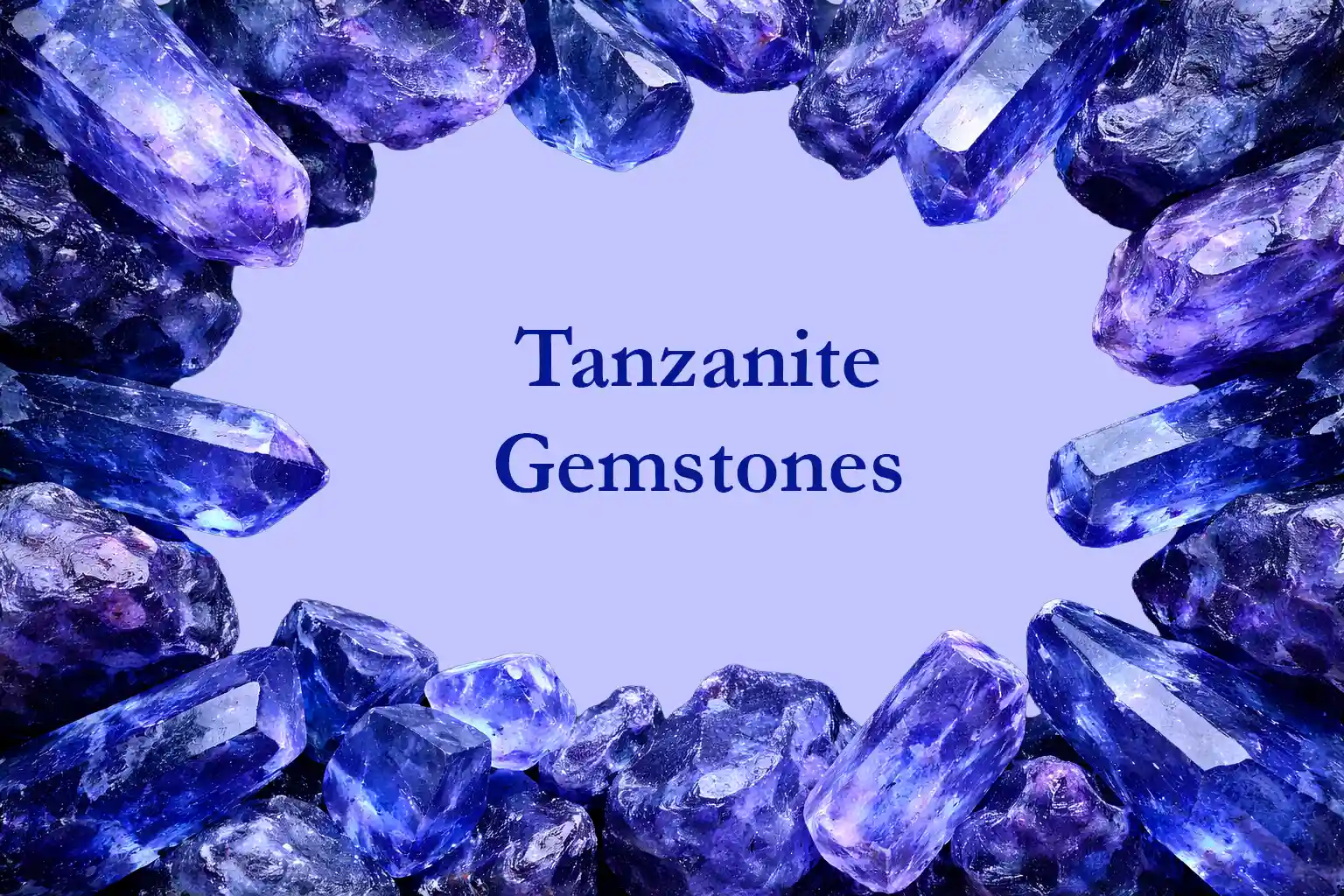
Interesting Facts About Tanzanite Gemstone
Did you know that tanzanite is 1,000 times rarer than a diamond01?
Tanzanites are found in a single-source location, specifically in a 4-kilometer strip near Mount Kilimanjaro.
This makes it the only gemstone in the world with a single-source location02.
Due to its sole specified location, geologists believe that the world’s supply could be entirely exhausted in the next 20 years.
Thus, tanzanite earned its nickname “the gemstone of a generation”03.
Want more amazing facts? – Visit here
Where Serendibite Comes From
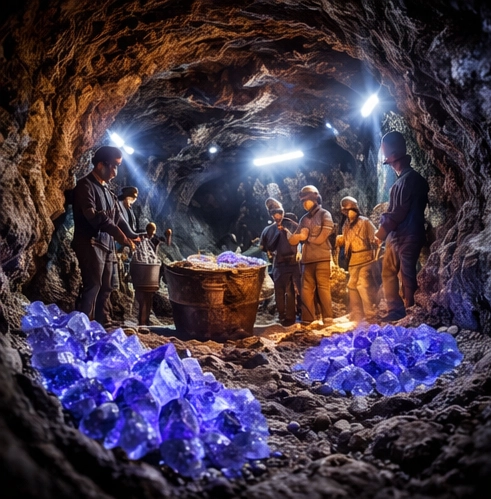
Tanzanite was discovered in 1967 in the Merelani Hills of northern Tanzania by Maasai tribesman Ali Juuyawatu. This gemstone was initially mistaken for sapphire due to its vivid blue color.
It was later identified as a rare variety of the mineral zoisite04.
This gemstone was famously branded by Tiffany & Co. to reflect its unique birthplace.
This also paved the way for the gemstone to become a modern birthstone05.
This gemstone is a calcium-aluminum silicate.
It is famous for its remarkable trichroism, which is the ability to show three different colors when viewed from three different directions06.
Depending on the angle, tanzanite can show shades of burgundy red, violet, and deep sapphire blues06.
Albeit its natural brown or gray color, gentle heat treatment can unlock its signature velvet blue hue.
It is a single-source gemstone found in a 4-kilometer area at the foothills of Mount Kilimanjaro in Tanzania07.
This serves as the primary and only source of the gemstone.
With this, the stone is finite and therefore susceptible to depletion08.
How It Is Processed or How It Is Made
Tanzanite is a natural gemstone extracted from deep underground tunnels09.
Upon the mining of “treacle-colored” brown zoisite, this undergoes heat treatment (gentle heating)10.
This process mimics natural geothermal heat to deplete brown tones.
Thereby, it unlocks the signature velvety blue and violet colors of tanzanite11.
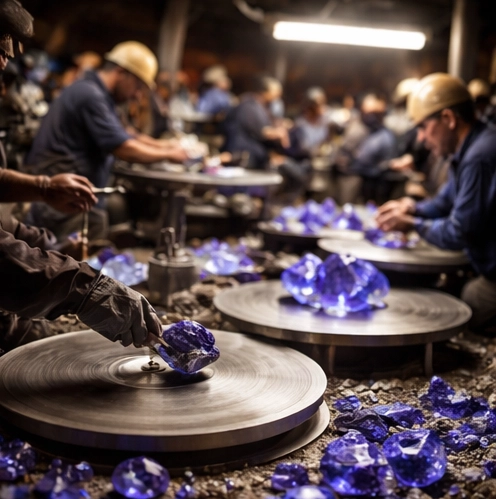
Due to the gemstone’s trichroic properties, master cutters must precisely orient the rough stone before cutting12.
Afterward, they utilize diamond-lapidary wheels in order to facet the gem.
Color saturation and brilliance are prioritized over weight retention.
Why It Is Expensive and How Rare It Is
The high value of tanzanites lie on its geographical exclusivity13.
It is only found within a small 4-kilometer strip in Tanzania.
Other than Tanzania, there is no other place in the Earth where tanzanites are found.
This, in effect, makes it 1,000 times rarer than diamonds14.
Geologists also believe that the existing supply of tanzanites can be exhausted within one generation15. Hence, it is highly scarce.
This scarcity, coupled with the surging demand from collectors, elevates its price value even more16.
Famous Jewelry Made from Tanzanite Gemstones
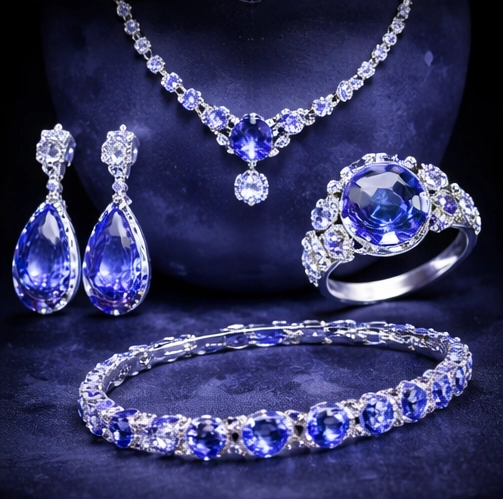
Famous tanzanite jewelry pieces highlight the gem’s immense scale and vivid color.
Some notable pieces are:
- The Queen of Kilimanjaro Tiara – It is one of the world’s most famous tanzanite pieces. It features a massive 242-carat tanzanite set along with 803 tsavorite garnets and 913 diamonds17.
- The Petersen Tanzanite Brooch – It is a tanzanite brooch that was designed by Harry Winston in the Smithsonian. It showcases a matched pair of over 30-carat tanzanites that can be detached to be worn as earrings18.
- The Namunyak Necklace – It is a 423-carat cushion-cut tanzanite, which is the largest ever faceted. It is suspended from a complex diamond and white gold collar17.
Tanzanite’s Market Value (Price per Carat)
Tanzanites have exceptional price value. As of 2026, tanzanite prices reflect its increasing rarity and scarcity19.
As for commercial-grade stones, the prices range from $300 to $600 per carat.
As for top-tier (AAA+) specimens with vivid blue-violet saturation, the price ranges from $800 to $1,500 per carat. As for large, investment-grade gemstones over 10 carats, the values heighten even more.
The “one-generation” supply also affects the price of tanzanites.