Interesting Facts About Serendibite
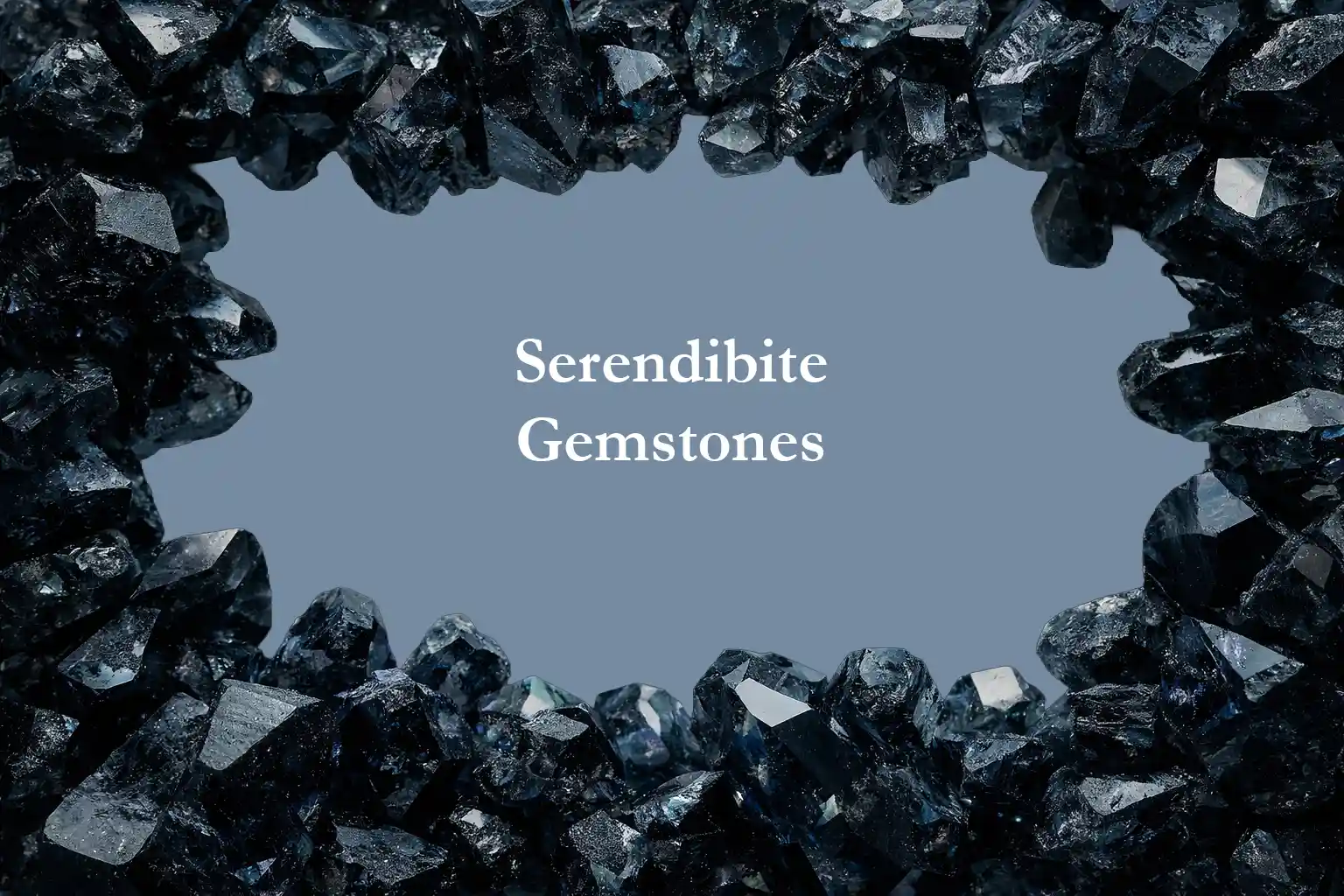
Did you know serendibites are considered rare since there are only three faceted specimens known to exist until 200501? It was first discovered in Sri Lanka in 1902. The gemstone’s name comes from the term “Serendib”, which is the old Arabic name for Sri Lanka. It is known for its deep blue-black colors composed of complex borosilicate02.
Want more amazing facts? – Visit here
Where Serendibite Comes From
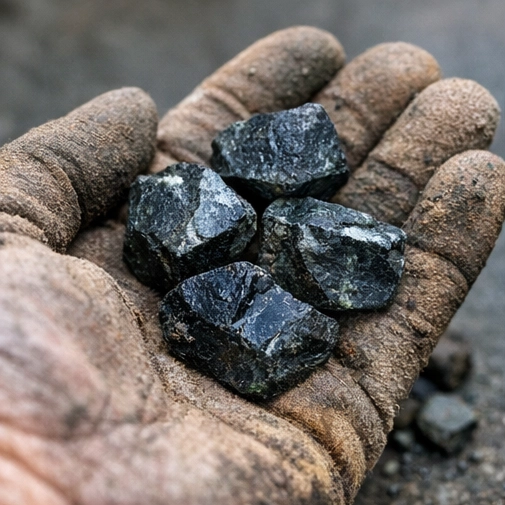
Serendibite was first discovered in 1902. It was found at Gangapitiya, near Ambakotte, Sri Lanka by mineralogists named A.K. Coomaraswamy and G.T. Prior03. The term “Serendibite” was coined from the ancient Arabic name for Sri Lanka “Serendib”, which is a tribute to its original place of discovery04.
The gemstone is known for its complex borosilicate composition. Its hues makes it one of its notable characteristic for its deep blue to ink black color. In some cases, the mineral can also appear in shades of grayish-gree, pale yellow, or even violet-blue05. Its most iconic form is vitreous and opaque. The gemstone can also exhibit strong pleochroism, which means it can display different colors (such as blue, yellow, or green) upon viewing it from different angles06.
The high-quality gemstones are found in the Ratnapura district in Sri Lanka, as well as in the Mogok region in Myanmar07. In the Mogok region, serendibite is discovered as dark, sharp crystals in skarn deposits. Other locations where serendibite is found is in USA (such as in California and New York), Canada, Russia, and even Madagascar08.
How Serendibite are Processed
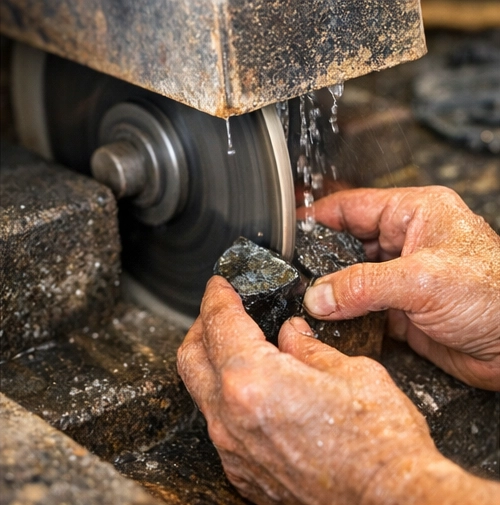
Serendibite is extracted naturally with no commercially available synthetic versions. The processing of serendibite often starts with the extraction of stones in alluvial deposits a raw, often water-worn crystals09. The cutting process comes after extraction. Oval or cushion cuts are often preferred over other types of cuts since it prioritizes weight retention, thereby preserving the gemstone’s mass10. Due to seredibite’s distinct cleavage, the cutting process is high-risk since it can cause to split under pressure. Precision faceting machines and diamond-tipped laps are used by skilled cutters in order to grind and polish the stone’s surface to a vitreous luster11. Serendibite is rarely heat-treated or irradiated since its natural deep-blue to black “ink” hue is its notable feature12.
How Expensive and Rare Serendibite Are
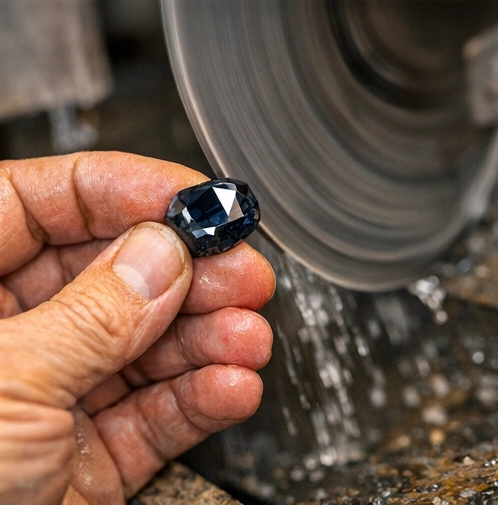
Serendibite is expensive due to its complex chemical composition and its finite geological supply13. Sri Lanka served as its primary source for over a century. As of 2026, transparent, facet-grade stones are still incredibly rare.
Famous Jewelry Made from Emerald Gemstones
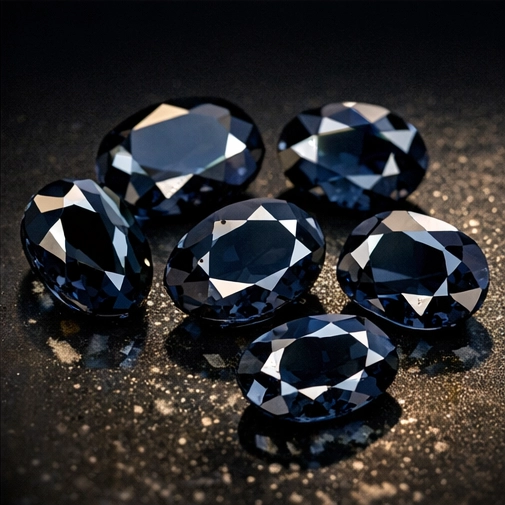
Serendibite is rarely found in commercial jewelry. It s often featured in:
- Investment-grade rings – It is set in high-purity platinum or gold. The gemstone is often surrounded by diamonds in order to contrast its dark, inky color14
- Museum pendants – Serendibite is showcased as large, faceted stones in minimalist settings for display15
Serendibite’s Market Value (Price per Carat)
The market price for serendibite depends on the type of stones. As for opaque or included stones, the price is approximately $2,000 per carat. As for high-quality transparent stones, the price range around $18,000 to $30,000 per carat. For exceptional specimens, world-class examples have been valued at around the price fo $1.8 million per carat16.