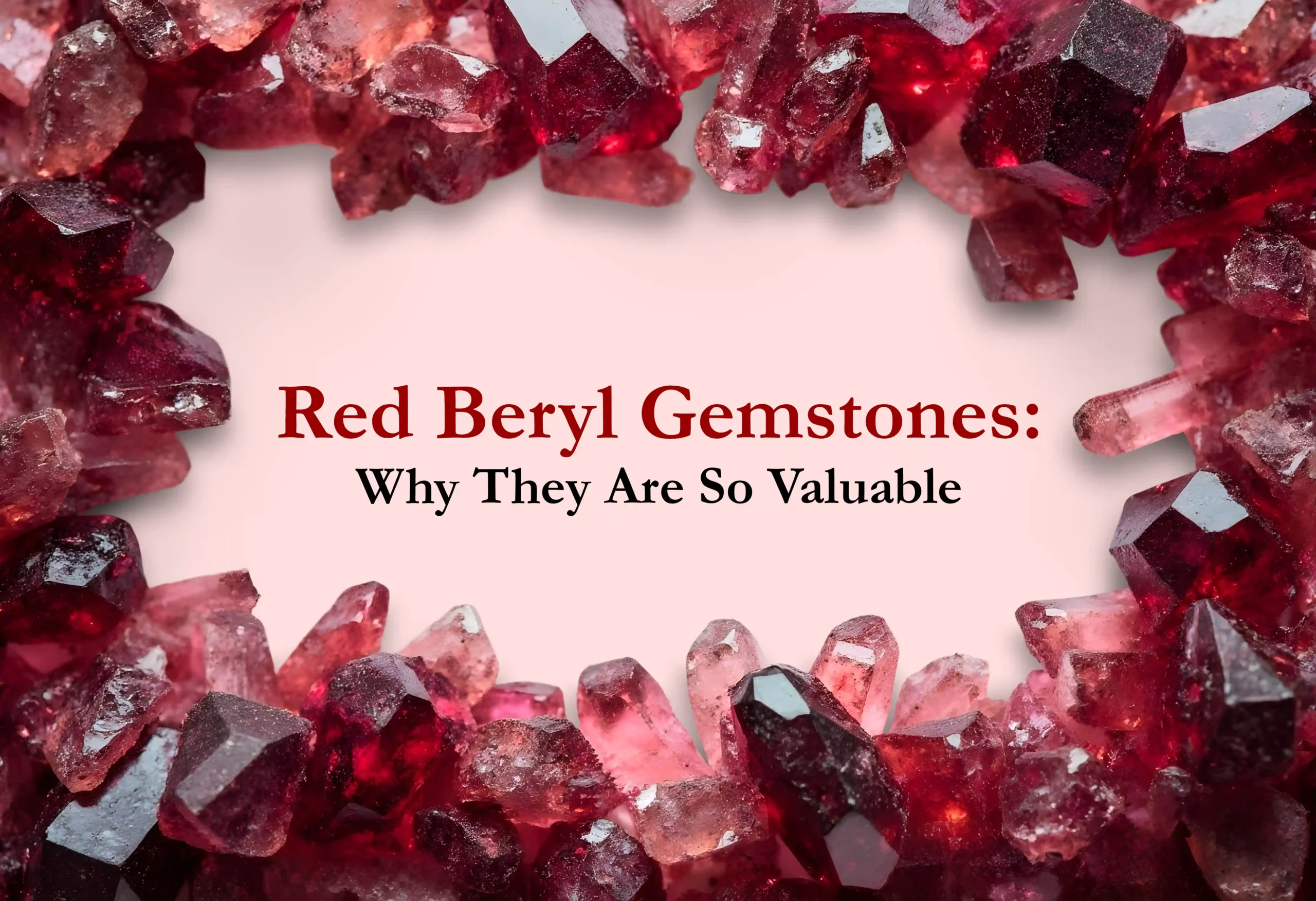
Interesting Facts About Red Beryl
Did you know red beryls are rare that the Utah Geological Survey estimates that for every one crystal found, it accounts for every 150,000 gem-quality diamonds01?
This gemstone is often coined as “red emerald” for its raspberry-color.
It is only found in the Wah Wah Mountains in Utah, USA as facet-quality stones02.
The vibrant color of this stone is attributed to the trace amounts of manganese in its crystal structure03.
Want more amazing facts? – Visit here
Where the Red Beryl Comes From
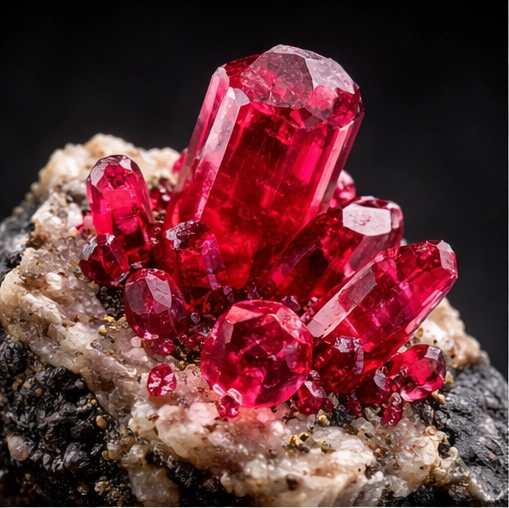
Red beryl was discovered in 1904 in the Thomas Range of Utah, USA by Maynard Bixby04.
The initial name of the gemstone was “Bixbite”.
Later on, the name was then changed in order to avoid confusion with another mineral named “bixbyite”.
It was in 1958 that gem-quality stones were unearthed in the Wah Wah Mountains in Utah, USA by Lamar Hodges.
This is the only site to produce high-quality red beryl stones05.
The stone was often called the “Red Emerald”.
It is a beryllium aluminum silicate that has a vibrant raspberry to strawberry-red color due to trace amounts of manganese06.
It has a hexagonal crystal structure07.
Unlike the emerald, red beryl is smaller in size.
It weighs less than 0.15 carats.
Red beryl is found almost exclusively in the Southwestern parts of the United States08.
Primarily, its main commercial source is the Ruby-Violet Mine in the Wah Wah Mountains of Beaver County, Utah09.
In other locations, there are smaller, non-gem-quality deposits discovered in the Thomas Range and Starvation Canyon in Utah, in the Paramount Canyon and Round Mountain in New Mexico, and San Luis Potosi in Mexico10.
How It Is Processed or How It Is Made
Red beryl is a natural gemstone and cannot be replicated synthetically with its rare volcanic origin.
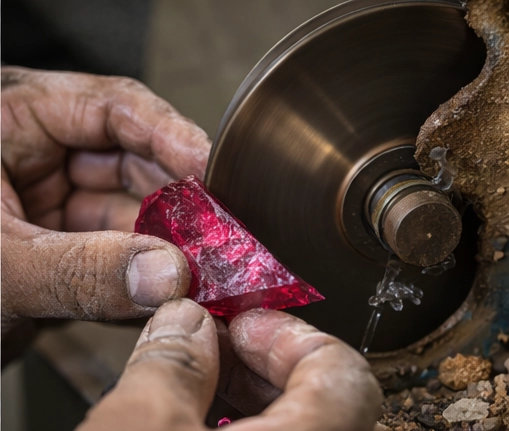
The gemstone is processed in a multi-step process where it transitions from a rough crystal to a polished gem.
The first step is selective extraction. This involves meticulous extraction by hand from hard rhyolite rocks. This is to avoid shattering the brittle material11.
The next step is precision faceting.
This is where lapidaries cut the rough stone through custom “step-cuts” in order to preserve its weight, especially when most crystals are tiny. Hence, weight retention is prioritized over traditional proportions.
The last step is treatment.
Minimal treatment is often observed since red beryls are often left untreated unlike emeralds.
It is rarely oil-filled or heather since its natural manganese color is stable.
It is often prized for its “no-enhancement” status12.
Why It Is Expensive and How Rare It Is
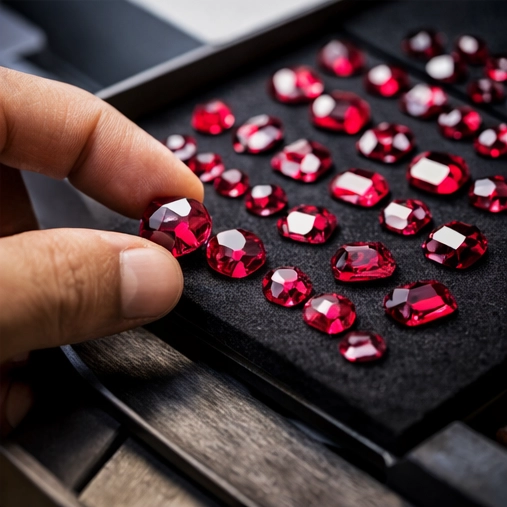
Red beryl is expensive due to its scarcity.
The rarity ratio is for every one crystal of red beryl found, around 150,000 gem-quality diamonds are unearthed13.
This scarcity is attributed to the rare geological phenomenon need for the creation of the crystal from manganese-infused volcanic gases. Currently, the Wah Wah Mountains remain as its primary source14.
Examples of Jewelry Made From This Gemstone
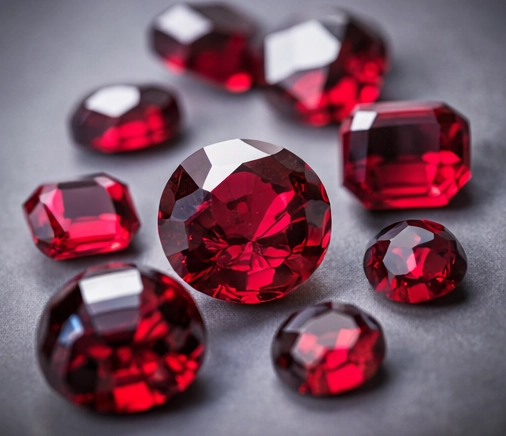
Red beryls are typically found in specialized collector and museum pieces rather than mass-market retail due to its extreme rarity15.
Some notable pieces of red beryl include:
- The Scarlet Wonder – It is a large, faceted red beryl featured in the American Museum of Natural History collection16
- Sun Ray Ring – It is a high-quality jewelry piece by Caratell as it features a rare 2.20-carat emerald-cut red beryl flanked by white diamonds17
Red Beryl’s Market Value (Price per Carat)
Due to the exceptional rarity of red beryl, the market value of the stone is high.
It varies depending on its weight as well as the quality.
As for commercial-grade stones below 0.5 carats, its price ranges from $2,000 to $10,000 per carat.
As for high-quality gems between 0.5 and 1.0 carat, it ranges around $20,000 to $50,000.
As for high-quality stones beyond 1.0 carat, which are deemed as global rarities, the prices often go above $100,000 per carat18.