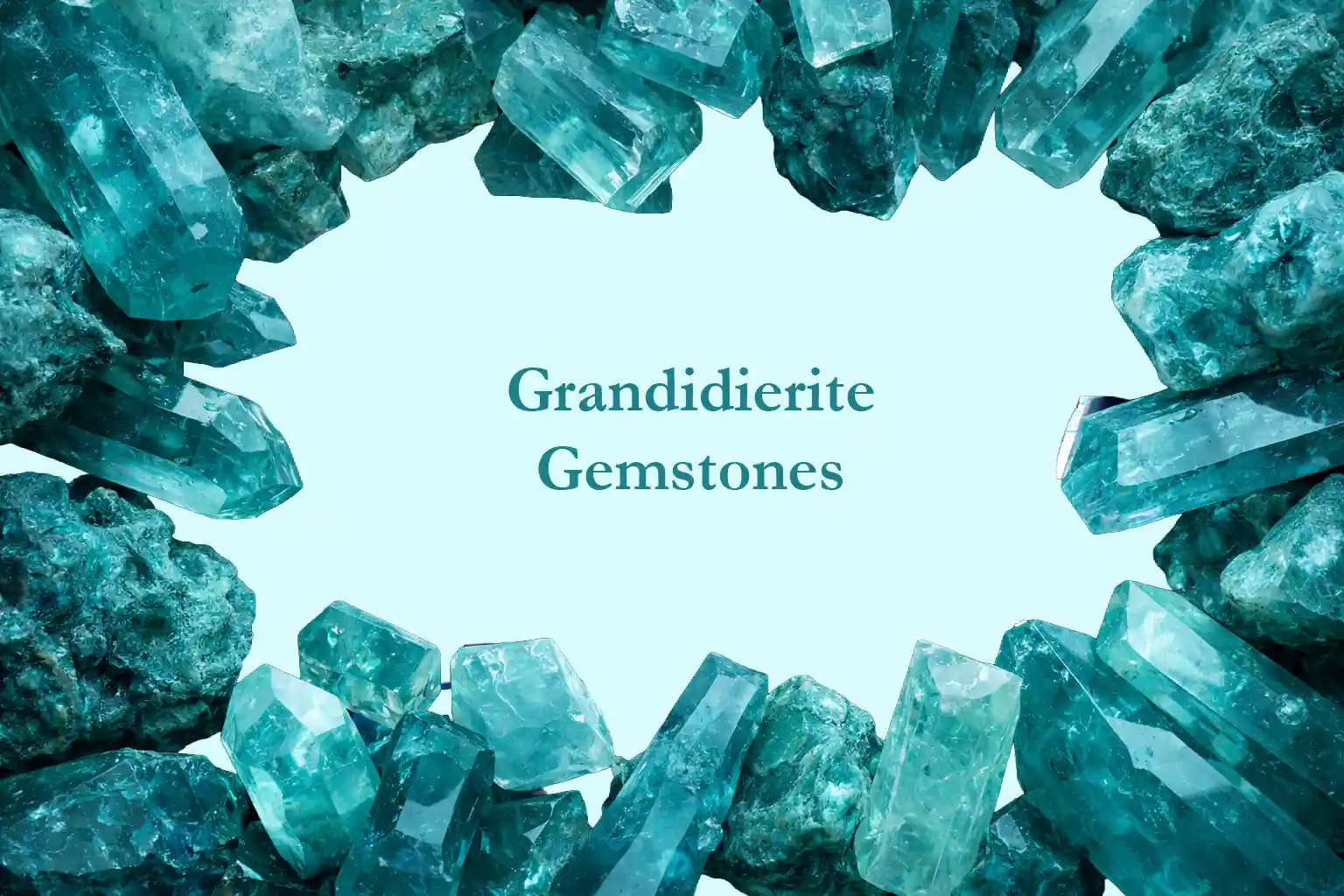
Interesting Facts About Grandidierite
Did you know that Grandidierite is so rare that eye-clean, transparent specimens were not heard of until its discovery. It is a rare mineral first discovered in 1902 in southern Madagascar1. The term Grandidierite is named after Alfred Grandidier, a French explorer who studied Madagascar’s natural history. Its rarity is established ever since its discovery. According to Gemological Institute of America, it was only until 2014 that a significant amount became accessible to collectors2.
Want more amazing facts? – Visit here
Where Grandidierite Comes From
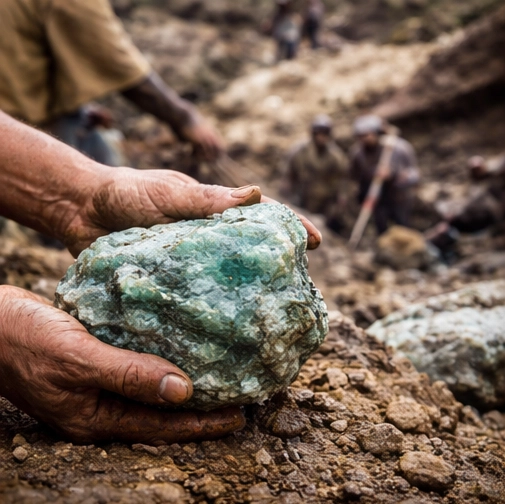
Grandidierite is a fascinating gemstone known for its beauty and rarity. It was first discovered on 1902 by French mineralogist Alfred Lacroix3. The initial specimens were found at Cape Andradohama on the southern coast of Madagascar1. It was initially coined as a “collector’s ghost” for over a century upon its discovery. This is because original deposits were so small and crystals were cloudy that they could not be turned into clear gemstones4.
The gem exudes vibrant bluish-green colors like the hues of the deep sea. Its characteristic is heavily trichoic, which shifts colors between dark blue-green, colorless, and dark green when viewed from different angles5. The “eye-clean” transparent variety is the rarest type of grandidierite.
Madagascar is the primary source of this gem, particularly the Tranomaro area6. However, there are reports where trace amounts are also found in other areas such as in Sri Lanka, Malawi, and Namibia7. But gem-quality, transparent gems are restricted to original deposits in Madagascar.
How Grandidierites are Processed
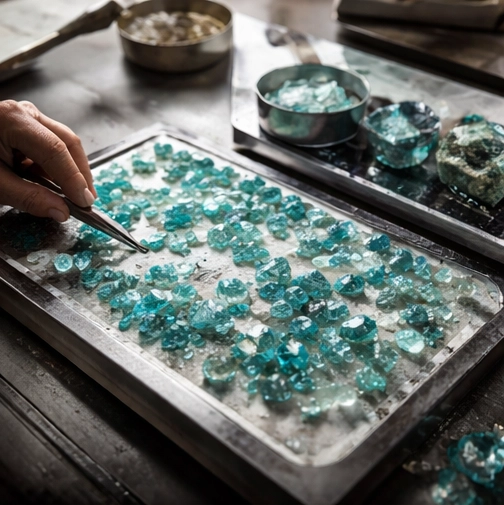
There is no heat or chemical treatments required in processing grandidierites as it is a 100% natural gemstone. The processes involved are extraction, selection, and cutting7. As for the extraction process, hand tools like pickaxes and spades are needed for manual extraction8. The selection process is tedious since the yield is low. Only 1 out of 10,000 crystals is of gem quality8. The cutting process is the most challenging. The stone has cleavage in two directions, which makes it prone to cracking. Its strong pleochrism also makes it tricky for the cutting process. It requires thorough inspection to determine the best orientation for the color-changing abilities to be distinct9. Cutters must precisely align the crystal to achieve the best “face-up” color while keeping as much of the rare material as possible.
How Expensive and Rare Grandidierites Are
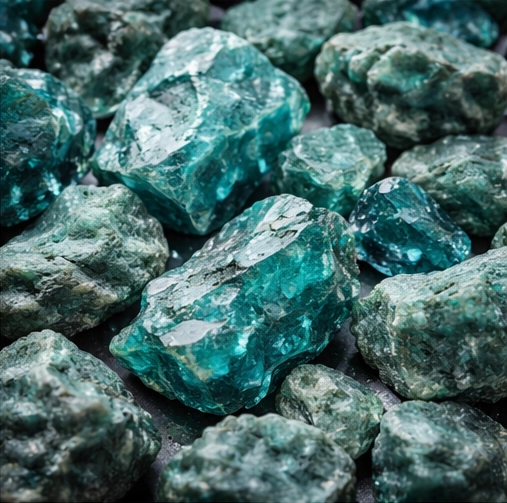
Grandidierite is expensive because of the scarcity of eye-clean, transparent crystals. Opaque versions are more common, yet, only 1 out of 10,000 rough stones is of gem-quality. It is also sensitive to handle. Many deposits are tiny and exhaust easily. Also, the two-directional cleavage makes cutting high-risk5.
Famous Jewelry Made from Grandidierite Gemstones
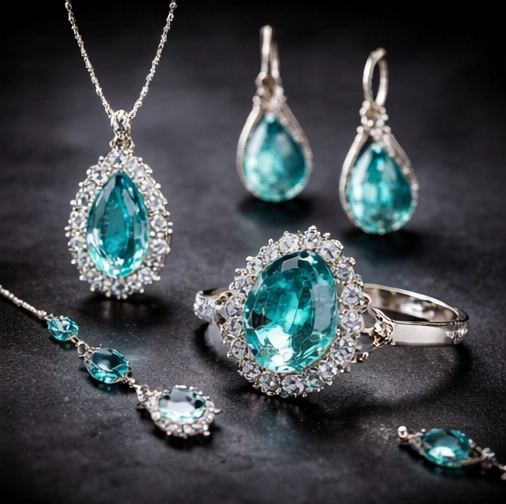
Grandidierite is used in high-end, bespoke jewelry due to its rarity. Jewelry pieces made from this gem are cocktail rings and solitaire engagement rings10. Pendants and drop earrings are also used to showcase its pleochrism qualities. As for translucent specimens, beaded necklaces or smooth cabochons are used11.
Grandidierite’s Market Value (Price per Carat)
The price of grandidierite differs based on clarity and transparency. Opaque or translucent specimens are more accessible. The price ranges from $10 to $100 per carat12. As for high-quality transparent gems, it is more expensive due to its beauty and rarity. The price ranges from $20,000 to $50,000 per carat12.