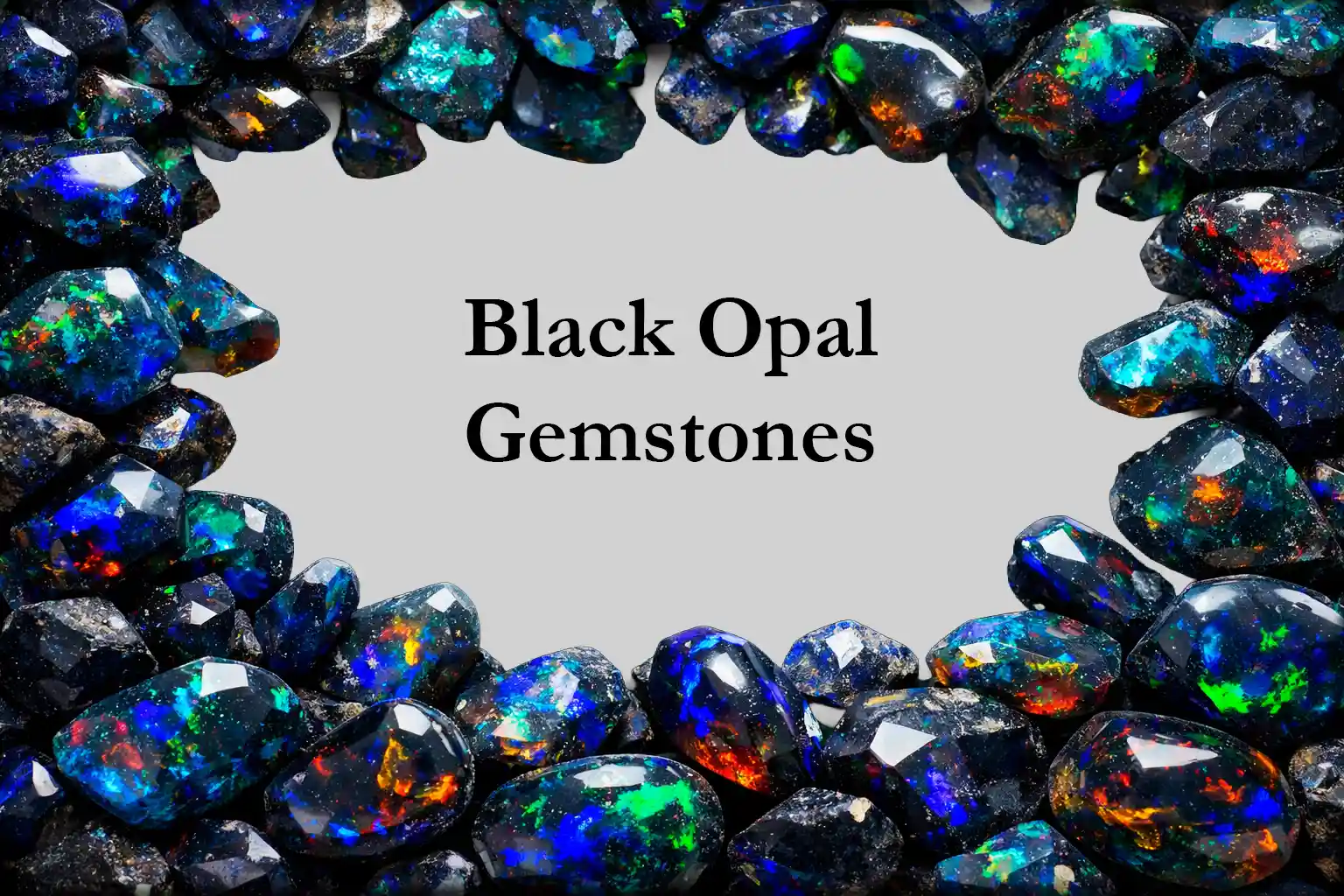
Interesting Facts About Black Opal
Did you know that black opal is the rarest and most valuable type of opal in Earth?
Unlike other opals, black opal emit a dark hue as it possesses a dark carbon and iron oxide body tone01.
This acts as a natural canvas which makes the color more vivid. The world’s supply of black opal is from the Lightning Ridge, Australia02.
Want more amazing facts? – Visit here
Where Black Opal Comes From
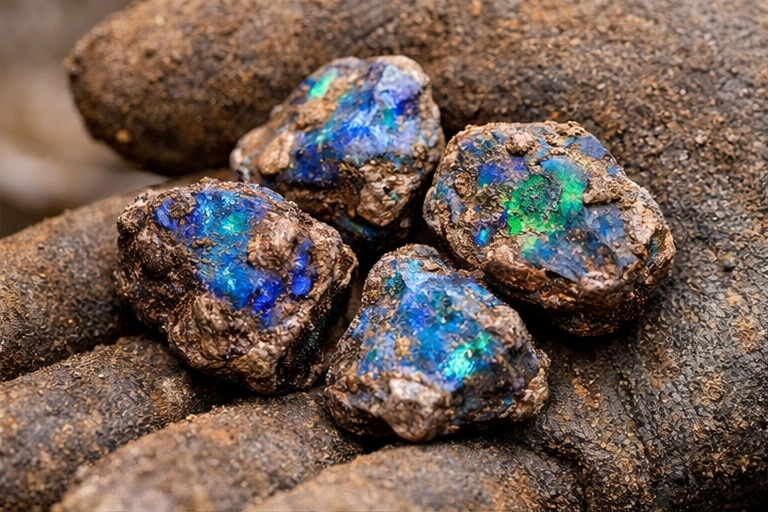
Black opal was discovered during the late 1800s.
The first commercial black opal was sold from Lightning Ridge, Australia during 1903 for $3003.
The gemstones are formed around 100 to 110 million years ago during the Cretaceous period.
The dark body tone of black opal serves as its defining feature.
Its color ranges from deep gray to jet black, which are graded N1 to N4.
The darkness of the gemstone is attributed to the trace amounts of carbon and iron oxide04.
There is a “play-of-color” phenomenon through the dark stone’s surface as it serves as a high-contrast backdrop.
This phenomenon show flashes of orange, green, neon red, and blue as it appears to dance within the gemstone as it moves05.
Black opals are primarily found in Lightning Ridge, New South Wales, Australia.
It serves as the primary source since it produces over 90% of the world’s supply.
Minor sources of black opal are found in Mintabie and Andamooka in Australia, the Wollo province in Ethiopia, and the Virgin Valley, Nevada in USA06.
How It Is Processed or How It Is Made
Processing black opal involves technical skill partnered with geological intuition.
Black opals are never faceted compared to other gemstones.
With this, they are shaped into smooth, domed cabochons in order to maximize its surface area07.
Black opals are processed into several steps.
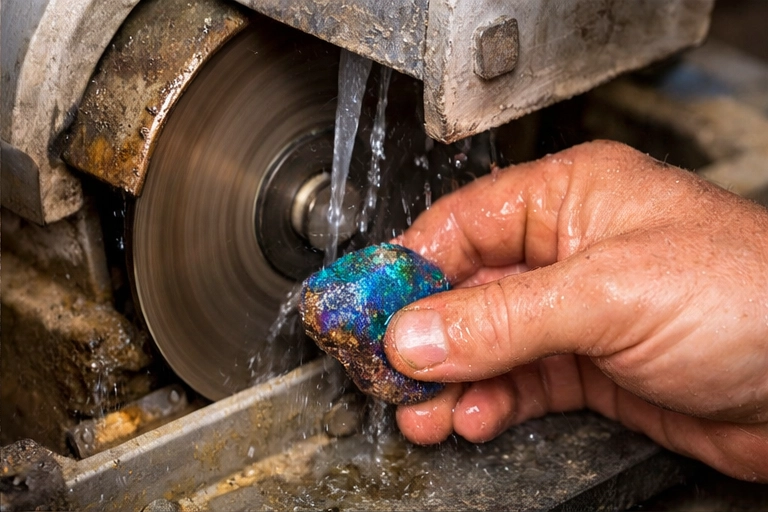
The first step is called “rubbing down”.
Lapidaries start by rubbing the rough stone on diamond wheels for the removal of the sandy exterior “skin”, which then exposes the hidden color bars08.
Afterward, the step is called “dopping” where the stone is attached to a dop stick using a heated wax.
This allows the cutter to manipulate it with such precision09.
Next, the black opal undergoes “shaping”.
This uses finer diamond-grit wheels to shape the dome.
This involves navigating “sand pits” carefully10. The last step is called “polishing”.
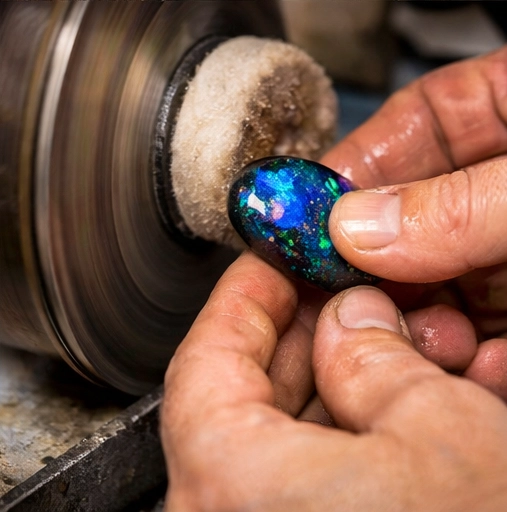
This is where the stone achieves the glass-like luster using a felt or leather wheel charged with cerium oxide or diamond paste11.
Why It Is Expensive and How Rare It Is
Black opals are expensive due to its dark body tone.
Furthermore, its value is also attributed to its extreme geological scarcity12.
Out of all opals, black opals consist of only about 5-8% of total opal production.
Its primary source is found within the Lightning Ridge, Australia.
Moreover, there are categories on the dark body tones of black opal.
It ranges from N1 to N4 classification.
This variation of tones differentiate the contrast the “canvas” makes in order to make its hues appear more vivid than common white opals12.
Examples of Jewelry Made From This Gemstone
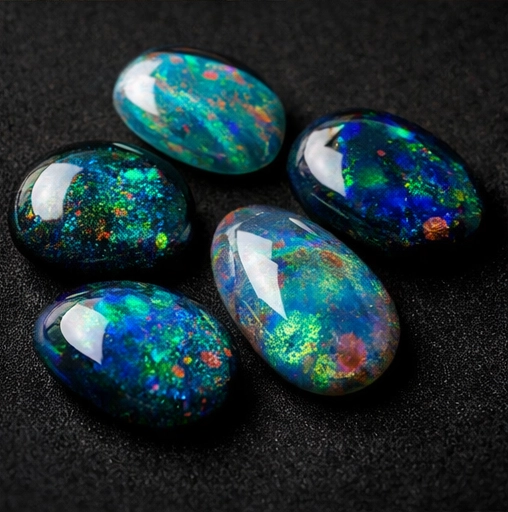
Black opal jewelries are handcrafted to become world-famous jewelries. Some of them are:
- The Aurora Australis – It is often named as the world’s most valuable black opal, which is around 180 carats. It showcases a “starfish” impression on its back coupled with a rare harlequin pattern. This is featured on a permanent display at the Altmann + Cherny showroom in Sydney, Australia13
- The Flame Queen (Fire Queen) – It is 263-carat “eye-of-opal” specimen famous for its raised central “iris” of gold-red color flanked by a blue-green border. It is the most expensive opal that has the value of over $3 million14
Black Opal’s Market Value (Price per Carat)
The prices of black opals vary accordingly based on its body tone (N1 to N4) and brightness. As for commercial-grade stones, the prices range from $500 to $3,000 per carat. As for high-quality gemstones with vivid neon colors, the prices go from $5,000 to $15,000. As for investment-grade stones, it can exceed around $20,000 per carat. These pertain specifically for those specimens with rare “Red on Black” or Harlequin pattens15.